Supreme Court tackles dispute over mail-in ballots ahead of November elections
Read Original Source
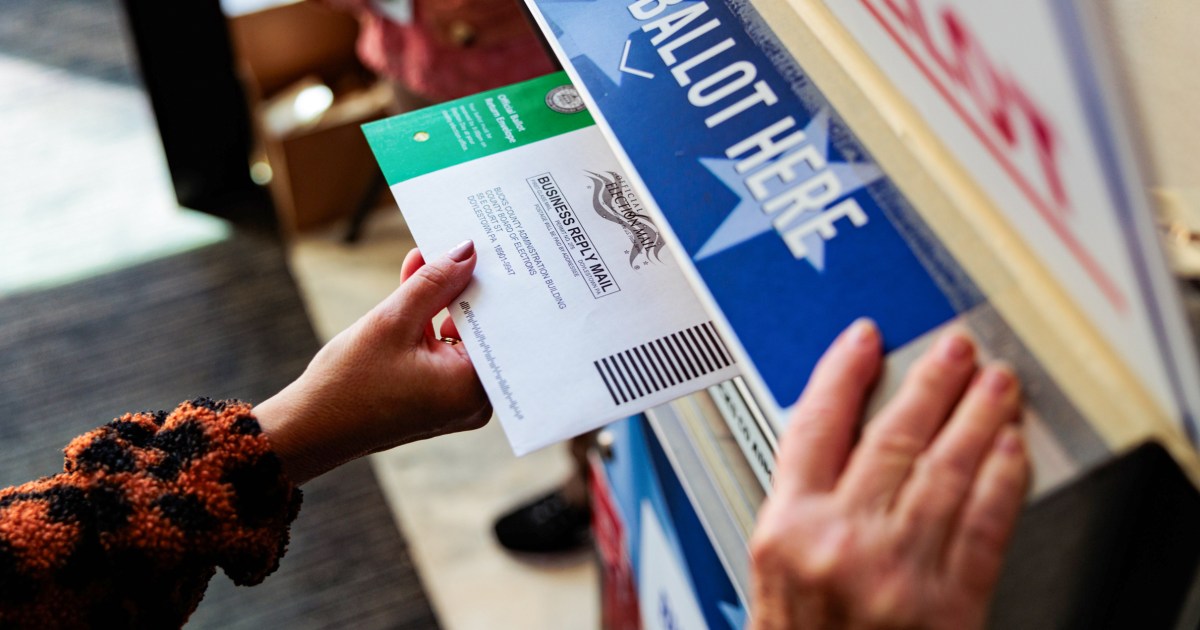
WASHINGTON — Conservative Supreme Court justices questioned Monday whether states should be allowed to count ballots that are mailed on time but arrive after Election Day. Subscribe to read this story ad-free Get unlimited access to ad-free articles and exclusive content. The nine justices heard more than two hours of arguments as President Donald Trump has ramped up his opposition to mail-in voting and urged Congress to ban it in most cases.
AI Summary
Main Idea: The Supreme Court heard a closely divided case over whether Mississippi and other states can count mail-in ballots that are postmarked by Election Day but arrive later.
Key Points:
- Conservative justices questioned whether federal election law allows ballots to be received after Election Day.
- The case could affect midterm elections and voting rules in Mississippi and 13 other states with similar laws.
- The dispute could also affect voters abroad and military members, since many states allow extra time for those ballots.
- Liberal justices argued that states have broad power to run elections and that federal law sets the date, not a strict receipt deadline.
Impact on the People
Negative Impact
A ruling against Mississippi could force many states to change mail ballot rules and may discard valid votes that arrive after Election Day, creating confusion for voters, military families, and overseas Americans.
Positive Impact
A ruling may also give clearer national rules for Election Day and reduce disputes over counting deadlines before the November elections.
How did each entity affect people?
Rate how each entity in this article affected the American people.
No entity suggestions or linked entities saved yet.
Candidate Entities11 candidates · 5 weighted vote min · 70% decision
- President Donald TrumppersonPrimaryAI selected
Major political actor driving the dispute by opposing mail-in voting and backing the challenge.
Include 0 (0%)Ignore 0 (0%)5 to threshold - Republican National Committeepolitical organizationPrimaryAI selected
Core challenger to Mississippi’s law and a principal party in the dispute.
Include 0 (0%)Ignore 0 (0%)5 to threshold - Supreme Court of the United Statesgovernment agency or bodyPrimaryAI selected
Central institution hearing the case and weighing the legality of late-arriving mail-in ballots.
Include 0 (0%)Ignore 0 (0%)5 to threshold - Justice Amy Coney BarrettpersonMajorAI selected
Named justice whose questions indicate she is an important swing voice in the case.
Include 0 (0%)Ignore 0 (0%)5 to threshold - Justice Elena KaganpersonMajorAI selected
Named justice pressing the argument that limiting flexible voting rules could affect early voting.
Include 0 (0%)Ignore 0 (0%)5 to threshold - Justice Ketanji Brown JacksonpersonMajorAI selected
Named justice articulating the liberal side’s concerns about congressional versus judicial policymaking.
Include 0 (0%)Ignore 0 (0%)5 to threshold - Justice Samuel AlitopersonMajorAI selected
Named justice whose questioning reflected skepticism toward Mississippi’s law.
Include 0 (0%)Ignore 0 (0%)5 to threshold
Comments 0
Comments here are the same thread shown when this article appears in The Pulse.
No comments on this article yet.
Sign in to comment