Supreme Court extends brief stay on SNAP payments as shutdown deal nears
Read Original Source
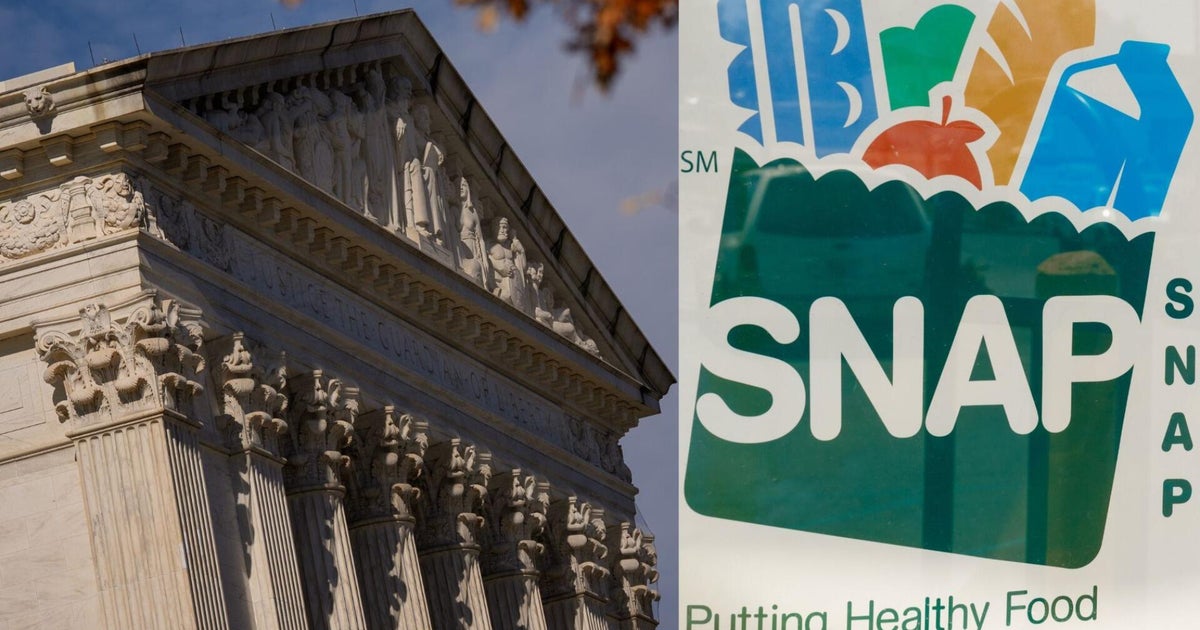
With Congress on the brink of a deal to end the government shutdown, the Supreme Court has agreed to let the political process play out and keep in place a brief pause of a federal court judge's ruling that ordered the Trump administration to fully fund SNAP benefits in November. About 42 million Americans rely on food aid from SNAP, the Supplemental Nutrition Assistance Program.
AI Summary
Main Idea: The Supreme Court extended a short pause on a ruling that would have forced the Trump administration to fully fund November SNAP benefits while Congress moves closer to ending the shutdown.
Key Points:
- The Court kept its stay in place until 11:59 p.m. ET Thursday to let the shutdown talks continue.
- Justice Ketanji Brown Jackson had granted the first stay, and she said she would have denied the request to extend it.
- The Trump administration argued the case could become moot if Congress passes a funding deal soon.
- SNAP serves about 42 million people, and officials had warned benefits could be cut by 35% if the shutdown continued.
Impact on the People
Negative Impact
SNAP households may face delayed or smaller food aid if the shutdown keeps blocking full payments, which can strain budgets and raise food insecurity for millions.
Positive Impact
A near-term deal could reopen the government and restore SNAP funding, reducing uncertainty for families and state agencies.
How did each entity affect people?
Rate how each entity in this article affected the American people.
- Primary:Supreme Courtgovernment agency or body
- Primary:Trump administrationpolitical organization
- Major:Congressgovernment agency or body
Candidate Entities11 candidates · 5 weighted vote min · 70% decision
- Supreme Courtgovernment agency or bodyPrimaryEvaluated
Central court whose stay decision is the main action in the article.
Include 0 (0%)Ignore 0 (0%)5 to threshold - Congressgovernment agency or bodyMajorEvaluated
Legislative body whose shutdown deal could moot the case.
Include 0 (0%)Ignore 0 (0%)5 to threshold - Trump administrationpolitical organizationNot scoredEvaluatedInclude 0 (0%)Ignore 0 (0%)5 to threshold
- Trump administrationgovernment agency or bodyPrimaryAI selected
Central executive-branch actor arguing for the stay to remain in place.
Include 0 (0%)Ignore 0 (0%)5 to threshold - House of Representativesgovernment agency or bodyMajorAI selected
Chamber expected to vote on the funding bill that could end the shutdown.
Include 0 (0%)Ignore 0 (0%)5 to threshold - Justice Ketanji Brown JacksonpersonMajorAI selected
Named justice who granted the initial stay and would have denied the extension request.
Include 0 (0%)Ignore 0 (0%)5 to threshold - United States Department of Agriculturegovernment agency or bodyMajorAI selected
Agency involved in the SNAP funding dispute and court filing.
Include 0 (0%)Ignore 0 (0%)5 to threshold
Comments 0
Comments here are the same thread shown when this article appears in The Pulse.
No comments on this article yet.
Sign in to comment