Supreme Court allows Alabama to use congressional map that eliminates a majority-Black district
Read Original Source
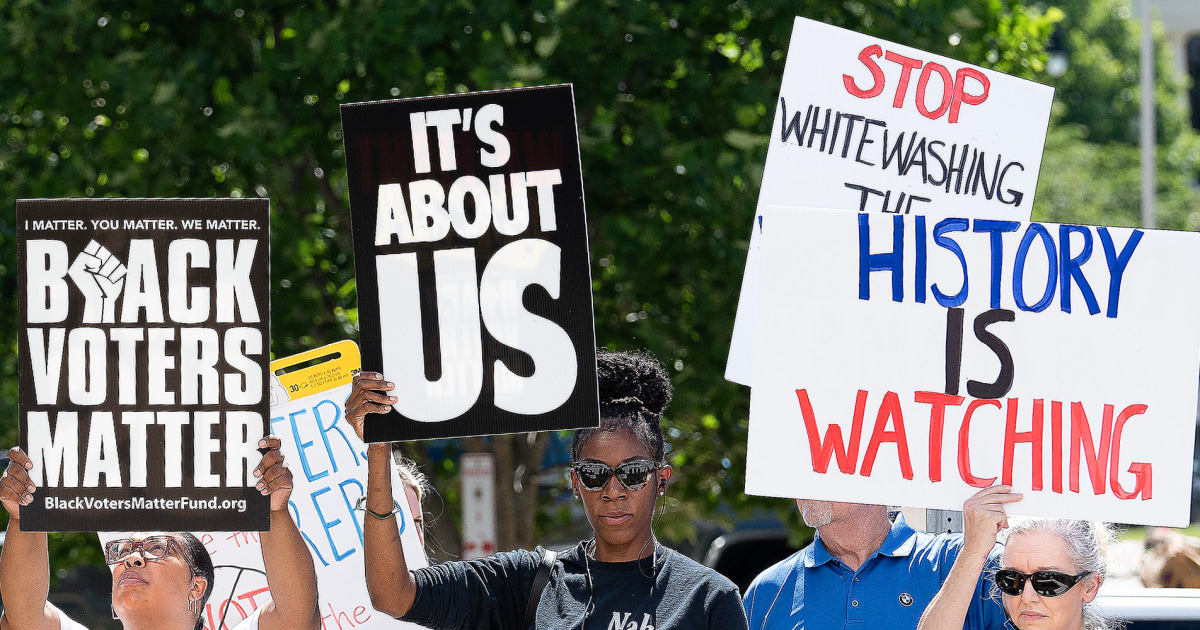
The Supreme Court on Tuesday allowed Alabama to use a congressional map that eliminates one of two majority-Black districts in the state in a win for Republicans. Subscribe to read this story ad-free Get unlimited access to ad-free articles and exclusive content. The justices, split 6-3 on ideological lines with conservatives in the majority, granted an emergency request filed by Republican officials seeking to use the map, which was enacted in 2023 but has never been used.
AI Summary
Main Idea: The Supreme Court let Alabama use a new congressional map that removes one majority-Black district, a move that likely helps Republicans.
Key Points:
- The court’s 6-3 ruling came on an emergency request from Alabama officials and allows the map to be used for upcoming elections.
- A lower court had found the map likely discriminated against Black voters and violated both the Constitution and the Voting Rights Act.
- The majority said the lower court did not give enough weight to a recent Supreme Court ruling that gave states more room to draw maps for partisan advantage.
- Critics, including Justice Sonia Sotomayor and the NAACP, said the decision harms Black voters and adds more election chaos.
Impact on the People
Negative Impact
The ruling may weaken Black voting power in Alabama and add confusion near the next election.
Positive Impact
Republican officials can use the map they wanted, which may give voters a faster path to settled election rules.
How did each entity affect people?
Rate how each entity in this article affected the American people.
- Primary:Alabamastate
- Primary:Supreme Courtgovernment agency or body
Candidate Entities11 candidates · 5 weighted vote min · 70% decision
- AlabamastatePrimaryEvaluated
The state whose congressional map and election administration are the subject of the ruling.
Include 0 (0%)Ignore 0 (0%)5 to threshold - Supreme Courtgovernment agency or bodyPrimaryEvaluated
Central court that issued the emergency order allowing Alabama to use the congressional map.
Include 0 (0%)Ignore 0 (0%)5 to threshold - Attorney General Steve MarshallpersonMajorAI selected
Alabama attorney general who publicly praised the ruling and represents the state’s position.
Include 0 (0%)Ignore 0 (0%)5 to threshold - Justice Sonia SotomayorpersonMajorAI selected
Named justice whose dissent is highlighted as a major part of the story.
Include 0 (0%)Ignore 0 (0%)5 to threshold - Republican officialspolitical organizationMajorAI selected
The state Republican actors sought emergency relief to use the map and are central to the outcome.
Include 0 (0%)Ignore 0 (0%)5 to threshold - LouisianastateContextCandidate
The state whose earlier case and map fight are cited as the legal catalyst for the Court’s action.
Include 0 (0%)Ignore 0 (0%)5 to threshold - President Donald TrumppersonContextCandidate
Mentioned as the president whose redistricting demand helped trigger the broader wave of map changes.
Include 0 (0%)Ignore 0 (0%)5 to threshold
Comments 0
Comments here are the same thread shown when this article appears in The Pulse.
No comments on this article yet.
Sign in to comment