Trump meeting with aides to make 'final determination' on moving forward with Iran deal
Read Original Source
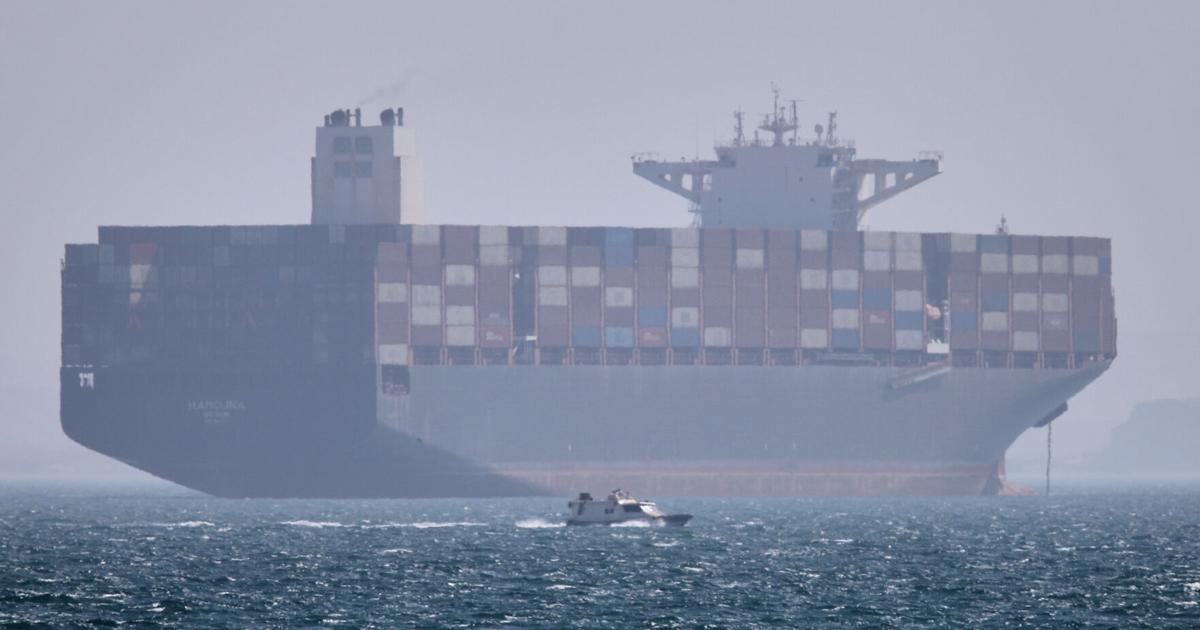
The Trump administration said from the start of the war with Iran that they undertook it to ensure that the country could never have a nuclear weapon. But Vance told reporters that the U.S. “could substantially set back their nuclear program -- over the long term.” A container ship sits at anchor as a small motorboat passes in the foreground in the Strait of Hormuz off Bandar Abbas, Iran, Saturday, May 2, 2026.
AI Summary
Main Idea: President Donald Trump met with advisers to decide whether to move forward with a tentative deal with Iran that would extend the ceasefire and reopen the Strait of Hormuz.
Key Points:
- Trump said he wanted a “final determination” and would only back a deal that blocks Iran from getting a nuclear weapon.
- A senior U.S. official said the meeting ended without a decision, and Iran said the agreement was not final either.
- The proposed deal would extend the ceasefire for 60 days while talks continue on Iran’s nuclear program.
- The talks also cover reopening the Strait of Hormuz, lifting some sanctions, and Iran’s demand for stronger guarantees and other concessions.
Impact on the People
Negative Impact
Oil and shipping could stay unstable if Trump and Iran do not lock in a deal, which can keep fuel and goods prices higher for US households and small businesses.
Positive Impact
A deal could lower the risk of more fighting and reopen the Strait of Hormuz, easing pressure on energy and trade costs.
How did each entity affect people?
Rate how each entity in this article affected the American people.
- Primary:President Donald Trumpperson
- Primary:United Statescountry
Candidate Entities9 candidates · 5 weighted vote min · 70% decision
- President Donald TrumppersonPrimaryEvaluated
Central actor making the final decision on whether to move forward with the Iran ceasefire and related deal.
Include 0 (0%)Ignore 0 (0%)5 to threshold - United StatescountryPrimaryEvaluated
Central state actor involved in the ceasefire, negotiations, sanctions, and naval transit issues.
Include 0 (0%)Ignore 0 (0%)5 to threshold - Esmail BaghaeipersonMajorAI selected
Iranian foreign ministry spokesman making a key public statement that the agreement is not finalized.
Include 0 (0%)Ignore 0 (0%)5 to threshold - International Atomic Energy Agencyinternational organizationMajorAI selected
Referenced as the source for uranium stockpile details central to the nuclear talks.
Include 0 (0%)Ignore 0 (0%)5 to threshold - Mohammad Bagher QalibafpersonMajorAI selected
Senior Iranian official whose public statement underscores Iran’s negotiating stance.
Include 0 (0%)Ignore 0 (0%)5 to threshold - Vice President JD VancepersonMajorAI selected
Key administration figure cited on the deal’s aims and nuclear-program terms.
Include 0 (0%)Ignore 0 (0%)5 to threshold - Abbas AraghchipersonContextCandidate
Iranian foreign minister involved in the diplomacy and phone discussions, but not the main focus.
Include 0 (0%)Ignore 0 (0%)5 to threshold
Comments 0
Comments here are the same thread shown when this article appears in The Pulse.
No comments on this article yet.
Sign in to comment