How Trump's move away from calls for a Ukraine ceasefire shifts him closer to Putin
Read Original Source
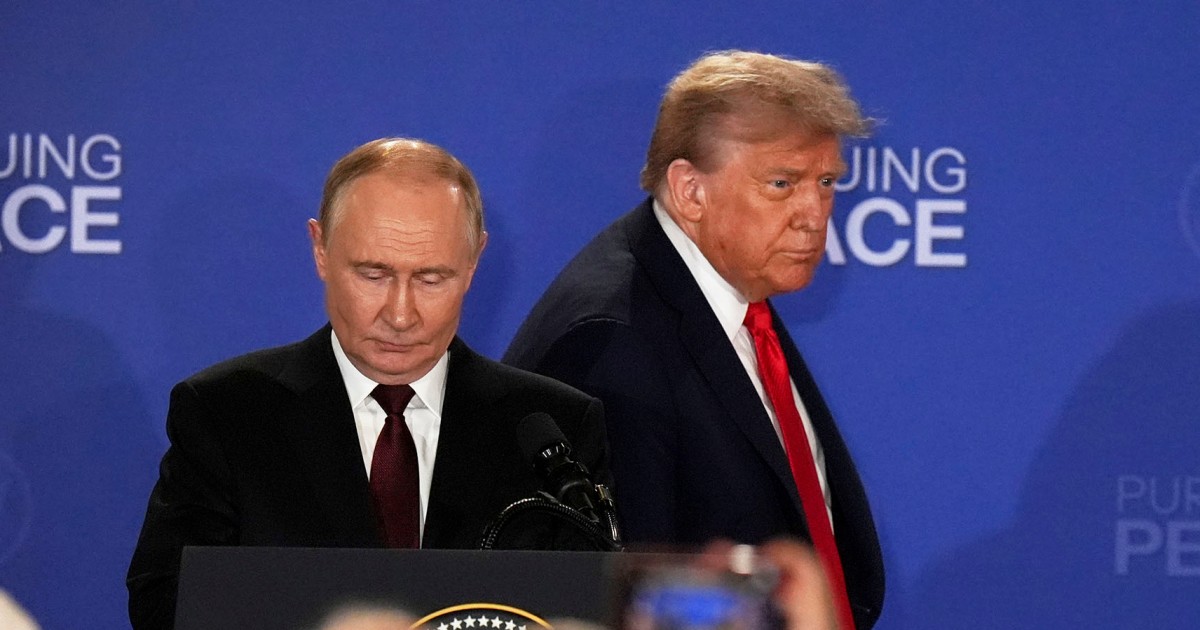
President Donald Trump has promised a “Peace Agreement” to end the war in Ukraine following his summit in Alaska with Russian President Vladimir Putin, dropping his demand for a ceasefire and sparking fears he is moving closer to Putin’s position. Limited time: Save 25% on NBC News subscription Get exclusive reporting, live Q&As and ad-free reading. Trump had phone calls overnight with Ukrainian President Volodymyr Zelenskyy — who travels to Washington for talks on Monday — and European leaders.
AI Summary
Main Idea: Trump said he now wants a peace deal, not a ceasefire, to end the war in Ukraine after meeting with Putin, a shift that has raised fears he is moving closer to Russia’s view.
Key Points:
- Before the Alaska summit, Trump had said he wanted a ceasefire first, but he changed course after talking with Putin.
- European leaders and Zelenskyy pushed back, saying Ukraine must be part of any talks and that borders cannot be changed by force.
- Analysts warned that if Trump accepts Russia’s demands, it could harm Ukraine and weaken Europe’s security.
- Fighting continued during the summit, and critics said Putin came away with the better public image.
Impact on the People
Negative Impact
Trump’s softer stance toward Putin could prolong the war, keep energy and food prices volatile, and raise security fears for US families and markets.
Positive Impact
A peace deal, if real, could reduce war risk and ease pressure on prices and supply chains.
How did each entity affect people?
Rate how each entity in this article affected the American people.
No entity suggestions or linked entities saved yet.
Candidate Entities9 candidates · 5 weighted vote min · 70% decision
- President Donald TrumppersonPrimaryAI selected
Central actor whose reversal on a Ukraine ceasefire and stated preference for a peace agreement drives the entire.
Include 0 (0%)Ignore 0 (0%)5 to threshold - Russian President Vladimir PutinpersonPrimaryAI selected
Key counterpart in the summit and the figure Trump is seen as moving closer to in position.
Include 0 (0%)Ignore 0 (0%)5 to threshold - European Commissioninternational organizationMajorAI selected
Part of the joint European response stressing Ukraine’s role in decisions on its territory.
Include 0 (0%)Ignore 0 (0%)5 to threshold - European Councilinternational organizationMajorAI selected
Part of the joint European response stressing Ukraine’s role in decisions on its territory.
Include 0 (0%)Ignore 0 (0%)5 to threshold - Ukrainian President Volodymyr ZelenskyypersonMajorAI selected
Major leader in the diplomacy, cited in calls with Trump and in the ensuing response.
Include 0 (0%)Ignore 0 (0%)5 to threshold - United KingdomcountryMajorAI selected
One of the European governments participating in the joint statement about further talks.
Include 0 (0%)Ignore 0 (0%)5 to threshold - Chatham Houseeducational / research institutionContextCandidate
Think tank whose fellows are quoted assessing the diplomatic shift and its risks.
Include 0 (0%)Ignore 0 (0%)5 to threshold
Comments 0
Comments here are the same thread shown when this article appears in The Pulse.
No comments on this article yet.
Sign in to comment