NATO members that spend the most — and least — on defense
Read Original Source
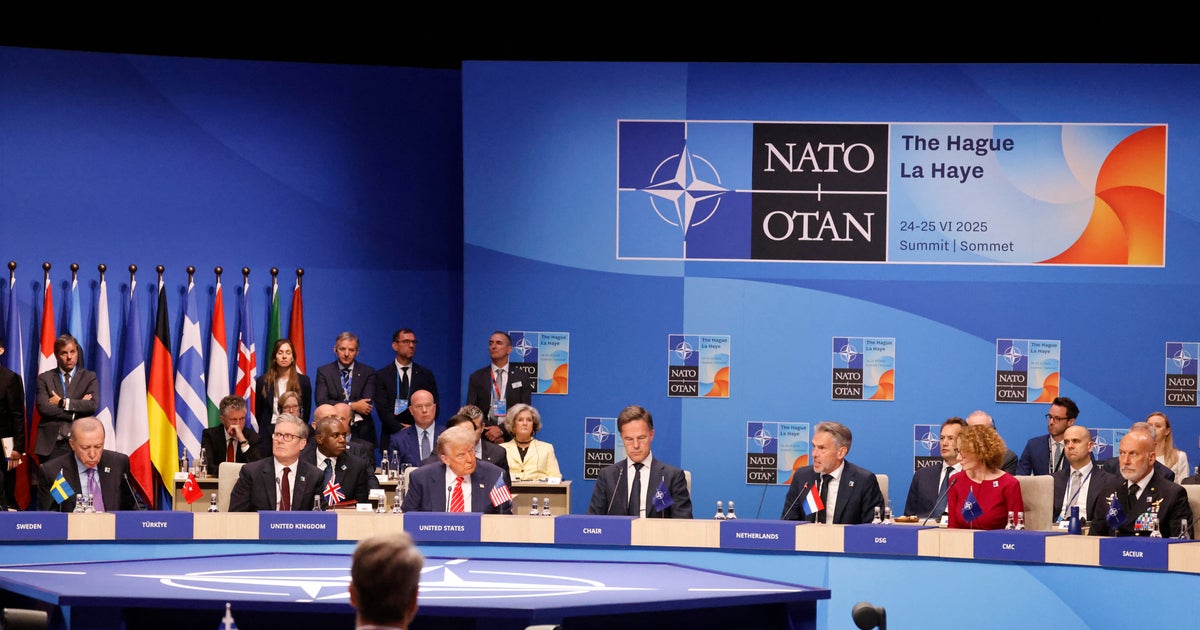
NATO leaders agreed on Wednesday to an increased defense spending goal of 5% of each country's economic output by 2035, more than doubling the previous target of 2%. President Trump praised the new defense agreement, calling it a "monumental win for the United States" during a speech at the NATO summit in the Netherlands. Mr. Trump has repeatedly demanded that NATO allies boost their defense spending, arguing that other countries disproportionately rely on the U.S..
AI Summary
Main Idea: NATO agreed to a new defense spending goal of 5% of GDP by 2035, while the latest figures show big gaps between members, with President Donald Trump praising the move and criticizing low spenders.
Key Points:
- NATO leaders raised the alliance’s defense spending target from 2% to 5% of each country’s economic output by 2035.
- In 2024, NATO members spent an average of 2.61% of GDP on defense, and 22 of 32 members met or beat the old 2% goal.
- Estonia was among the top spenders, along with Poland and Latvia, while the United States spent about 3.2% of GDP.
- Spain had the lowest share at 1.2%, and Trump attacked it for relying too much on other NATO members; Spain said the 5% goal is not realistic.
Impact on the People
Negative Impact
Higher NATO defense targets could raise US spending pressure, which may mean more tax costs or less money for other public needs.
Positive Impact
Stronger NATO spending may improve security for US households, workers, and businesses by reducing the risk of conflict.
How did each entity affect people?
Rate how each entity in this article affected the American people.
- Primary:President Donald Trumpperson
- Major:Estoniacountry
Candidate Entities5 candidates · 5 weighted vote min · 70% decision
- President Donald TrumppersonPrimaryEvaluated
Central named political figure whose comments and pressure on NATO spending are a major part of the story.
Include 0 (0%)Ignore 0 (0%)5 to threshold - EstoniacountryMajorEvaluated
Named as one of the top defense spenders in NATO.
Include 0 (0%)Ignore 0 (0%)5 to threshold - North Atlantic Treaty Organizationinternational organizationPrimaryAI selected
Central organization whose defense-spending target and member-country comparisons are the focus of the article.
Include 0 (0%)Ignore 0 (0%)5 to threshold - LatviacountryMajorAI selected
Named as one of the top defense spenders in NATO.
Include 0 (0%)Ignore 0 (0%)5 to threshold - Pedro SánchezpersonMajorAI selected
Named prime minister whose refusal to meet the 5% goal is a notable part of the article.
Include 0 (0%)Ignore 0 (0%)5 to threshold
Comments 0
Comments here are the same thread shown when this article appears in The Pulse.
No comments on this article yet.
Sign in to comment