World’s most sensitive radio telescope array set to be built in Nevada desert
Read Original Source
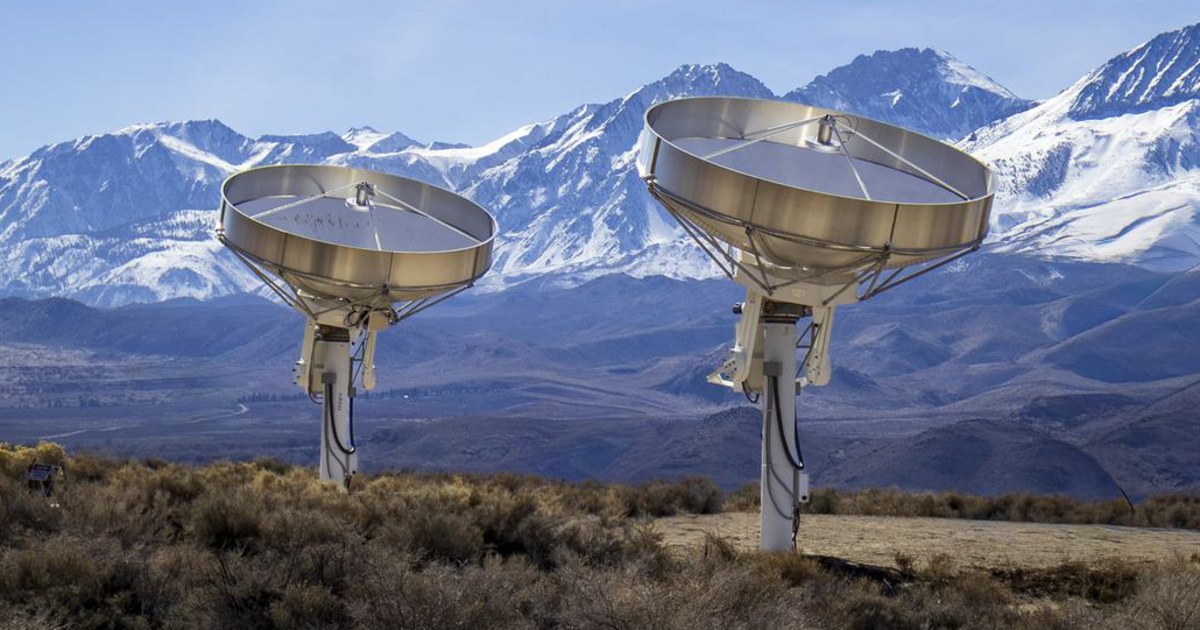
Nestled in the Great Basin, a remote stretch of the Nevada desert is set to become home to the world’s most sensitive radio telescope array. Subscribe to read this story ad-free Get unlimited access to ad-free articles and exclusive content. The California Institute of Technology, which is leading the project, announced last week that it is moving ahead with the telescope’s construction after securing enough funding.
AI Summary
Main Idea: Caltech is moving ahead with plans to build a huge, highly sensitive radio telescope array in Nevada’s desert after securing funding from Schmidt Sciences.
Key Points:
- The Deep Synoptic Array will use 1,650 radio dishes spread across more than 123 square miles in White Pine County, Nevada.
- The array is designed to study black holes, pulsars, and fast radio bursts, while scanning the sky much faster than current telescopes.
- Researchers say it will be able to find and pinpoint radio sources in huge numbers, then help other telescopes study them in more detail.
- The site was chosen because the remote desert has very low radio noise, which is needed for such a sensitive instrument.
Impact on the People
Negative Impact
Nevada taxpayers may see some local land-use, permitting, and infrastructure costs, while radio quiet areas can limit nearby wireless development.
Positive Impact
Caltech’s telescope could create jobs and advance science, and its data may help US researchers find black holes and fast radio bursts faster.
How did each entity affect people?
Rate how each entity in this article affected the American people.
- Major:Schmidt Sciencesnonprofit / NGO
Candidate Entities7 candidates · 5 weighted vote min · 70% decision
- Schmidt Sciencesnonprofit / NGOMajorEvaluated
Provided the funding that enabled the telescope project to proceed.
Include 0 (0%)Ignore 0 (0%)5 to threshold - California Institute of Technologyeducational / research institutionPrimaryAI selected
Leading the Deep Synoptic Array project and announced it is moving ahead with construction after securing funding.
Include 0 (0%)Ignore 0 (0%)5 to threshold - Gregg HallinanpersonMajorAI selected
Caltech astronomy professor and principal investigator quoted as a central decision-maker and explainer for the project.
Include 0 (0%)Ignore 0 (0%)5 to threshold - Vikram RavipersonContextCandidate
Caltech astronomy professor and co-principal investigator quoted about the project’s significance.
Include 0 (0%)Ignore 0 (0%)5 to threshold - Eric SchmidtpersonMinorCandidate
Identified as the former Google CEO and CEO of Relativity Space; mentioned in connection with the funding source.
Include 0 (0%)Ignore 0 (0%)5 to threshold - Relativity SpacecompanyMinorCandidate
Mentioned as the rocket company run by Eric Schmidt, in a funding-adjacent background detail.
Include 0 (0%)Ignore 0 (0%)5 to threshold - GooglecompanyMentionCandidate
Only appears as Eric Schmidt’s former employer in background context.
Include 0 (0%)Ignore 0 (0%)5 to threshold
Comments 0
Comments here are the same thread shown when this article appears in The Pulse.
No comments on this article yet.
Sign in to comment