'Confident' China touts poverty alleviation efforts amid trade war with the U.S.
Read Original Source
MALIPO, China — The rural villages of Malipo are a world away from gleaming Chinese cities like Beijing and Shanghai, reached by narrow roads that sometimes skirt dangerously close to deep ravines. Schoolchildren eat simple breakfasts while squatting on sidewalks, and even a local official complained that the remote mountain villages lacked access to the latest 5G internet connection. Limited time: Save 25% on NBC News subscription Get exclusive reporting, live Q&As and ad-free reading.
AI Summary
Main Idea: China is using its poverty reduction progress in Malipo County to show confidence in its development model and its ability to handle pressure from the U.S. trade war.
Key Points:
- Vice Foreign Minister Hua Chunying said China has the strength to overcome outside pressure and does not fear a trade war.
- Officials presented Malipo, a poor rural county in Yunnan, as proof of China’s long-running poverty alleviation efforts.
- The article says China still faces real economic strain, including weak rural spending, slowing growth, and tariff risks.
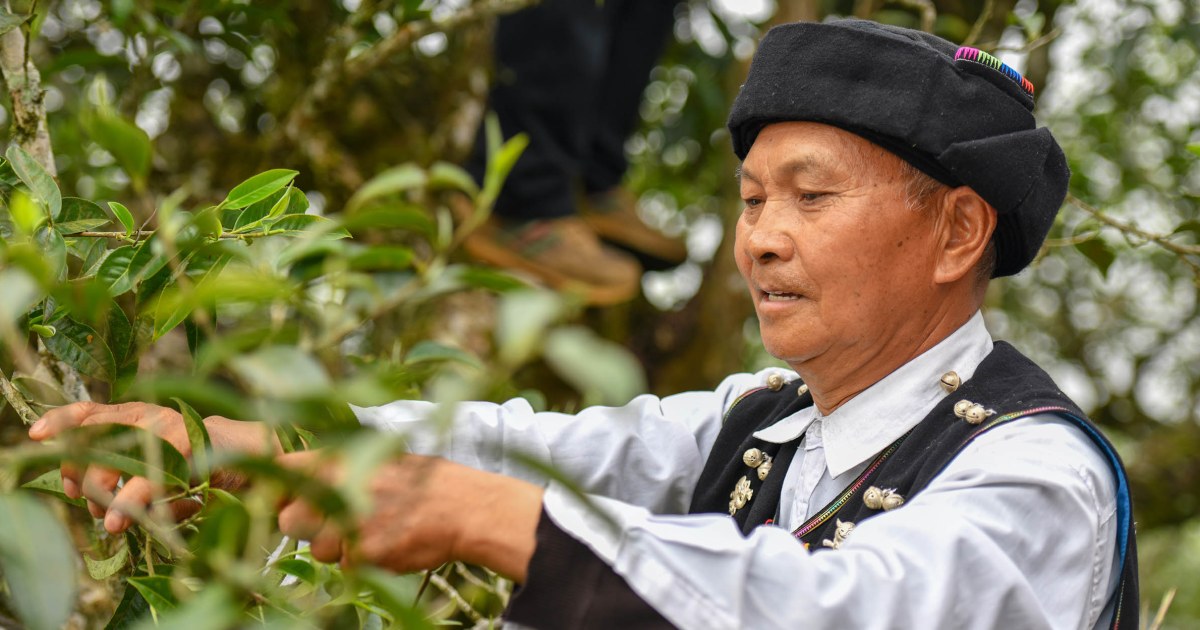
- Local investments in tea, farming, and border trade are being used to create jobs and support future growth.
Impact on the People
Negative Impact
China’s tariffs and weaker growth can raise prices and uncertainty for US consumers, workers, and small businesses that rely on Chinese trade.
Positive Impact
China’s push to buy more from its own rural areas could support steadier global supply chains and help limit some trade shocks for US markets.
How did each entity affect people?
Rate how each entity in this article affected the American people.
- Primary:Vice Foreign Minister Hua Chunyingperson
Candidate Entities8 candidates · 5 weighted vote min · 70% decision
- Vice Foreign Minister Hua ChunyingpersonPrimaryEvaluated
Named Chinese official whose remarks about confidence and tariffs are a primary focus.
Include 0 (0%)Ignore 0 (0%)5 to threshold - President Donald TrumppersonMajorAI selected
Named U.S. political leader whose tariff actions are central to the article’s conflict framing.
Include 0 (0%)Ignore 0 (0%)5 to threshold - President Xi JinpingpersonMajorAI selected
Named Chinese leader tied to the poverty-eradication goal described as officially achieved.
Include 0 (0%)Ignore 0 (0%)5 to threshold - Colorful GroupcompanyContextCandidate
Company investing in Malipo-area ventures and cited as part of the development story.
Include 0 (0%)Ignore 0 (0%)5 to threshold - Harvard Kennedy Schooleducational / research institutionContextCandidate
Institution associated with a quoted expert whose analysis is used to interpret China’s strategy.
Include 0 (0%)Ignore 0 (0%)5 to threshold - Sunwah GroupcompanyContextCandidate
Company described as investing in a tea factory in Malipo and creating jobs.
Include 0 (0%)Ignore 0 (0%)5 to threshold - JD.comcompanyMinorCandidate
E-commerce platform named as a sales channel for products tied to the regional investments.
Include 0 (0%)Ignore 0 (0%)5 to threshold
Comments 0
Comments here are the same thread shown when this article appears in The Pulse.
No comments on this article yet.
Sign in to comment