Supreme Court tells lower courts to take new look at 2 voting rights cases
Read Original Source
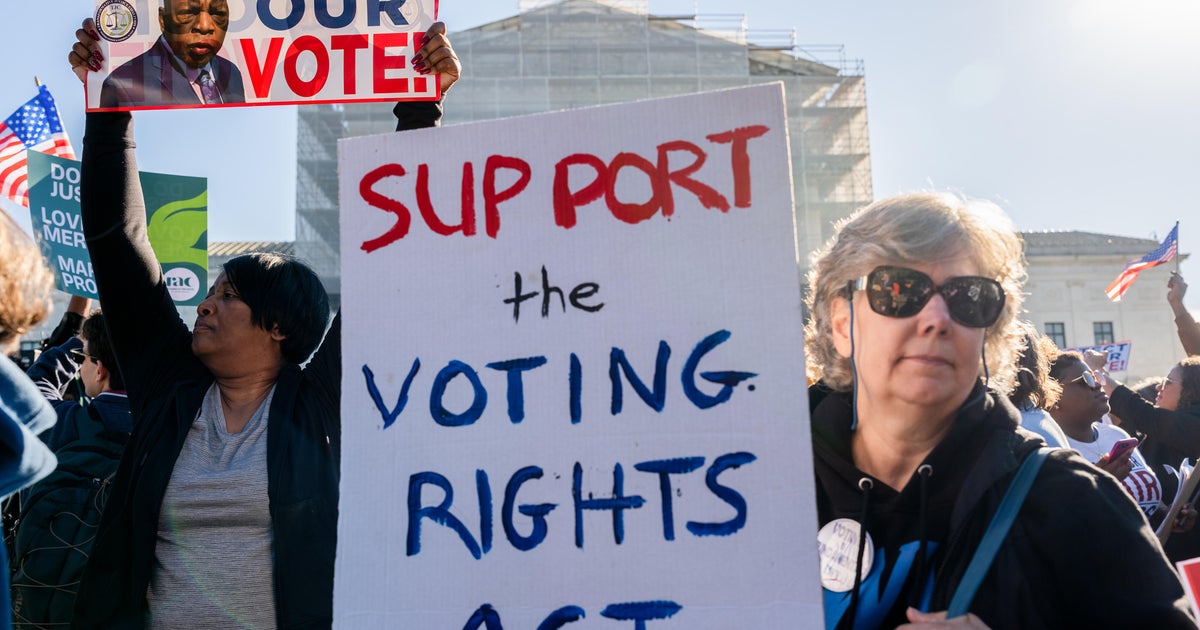
Washington — The Supreme Court on Monday told lower courts to take another look at a pair of cases involving whether private individuals and groups can sue to enforce a key provision of the Voting Rights Act that prohibits discriminatory voting practices. In brief orders, the high court set aside lower court decisions and sent the cases back for further proceedings in light of its landmark ruling last month weakening Section 2 of the Voting Rights Act. Justice Ketanji Brown Jackson dissented.
AI Summary
Main Idea: The Supreme Court sent two voting rights cases back to lower courts for another review after a recent ruling weakened part of the Voting Rights Act.
Key Points:
- The cases ask whether private people and groups can sue to enforce Section 2 of the Voting Rights Act.
- Justice Ketanji Brown Jackson disagreed with the court’s decision to send the cases back.
- The disputes involve voting maps in Mississippi and North Dakota that were challenged as discriminatory.
- The outcome could limit who can bring voting rights lawsuits and make the law harder to use.
Impact on the People
Negative Impact
New limits on who can sue under the Voting Rights Act could make it harder for voters and communities to challenge unfair maps and voting rules, especially in states like Mississippi and North Dakota.
Positive Impact
The Supreme Court review may bring clearer rules on voting-rights lawsuits, which could help courts and election officials know who can enforce the law.
How did each entity affect people?
Rate how each entity in this article affected the American people.
- Primary:Supreme Courtgovernment agency or body
Candidate Entities8 candidates · 5 weighted vote min · 70% decision
- Supreme Courtgovernment agency or bodyPrimaryEvaluated
Central court taking the featured action by sending both voting-rights cases back to lower courts.
Include 0 (0%)Ignore 0 (0%)5 to threshold - Justice Ketanji Brown JacksonpersonMajorAI selected
Named justice whose dissent is explicitly noted and tied to the court’s action.
Include 0 (0%)Ignore 0 (0%)5 to threshold - National Association for the Advancement of Colored Peoplenonprofit / NGOMajorAI selected
Mississippi chapter of this organization brought one of the key lawsuits.
Include 0 (0%)Ignore 0 (0%)5 to threshold - Spirit Lake Tribenonprofit / NGOMajorAI selected
Tribal plaintiff in the North Dakota case and a major party to the litigation.
Include 0 (0%)Ignore 0 (0%)5 to threshold - Turtle Mountain Band of Chippewa Indiansnonprofit / NGOMajorAI selected
Tribal plaintiff that sued in the North Dakota case and is central to the dispute.
Include 0 (0%)Ignore 0 (0%)5 to threshold - United States Court of Appeals for the Eighth Circuitgovernment agency or bodyMajorAI selected
Appellate court whose ruling is being challenged and whose decision is central to the article.
Include 0 (0%)Ignore 0 (0%)5 to threshold
Comments 0
Comments here are the same thread shown when this article appears in The Pulse.
No comments on this article yet.
Sign in to comment