Supreme Court rejects challenges to abortion clinic 'buffer zone' laws that restrict protesters
Read Original Source
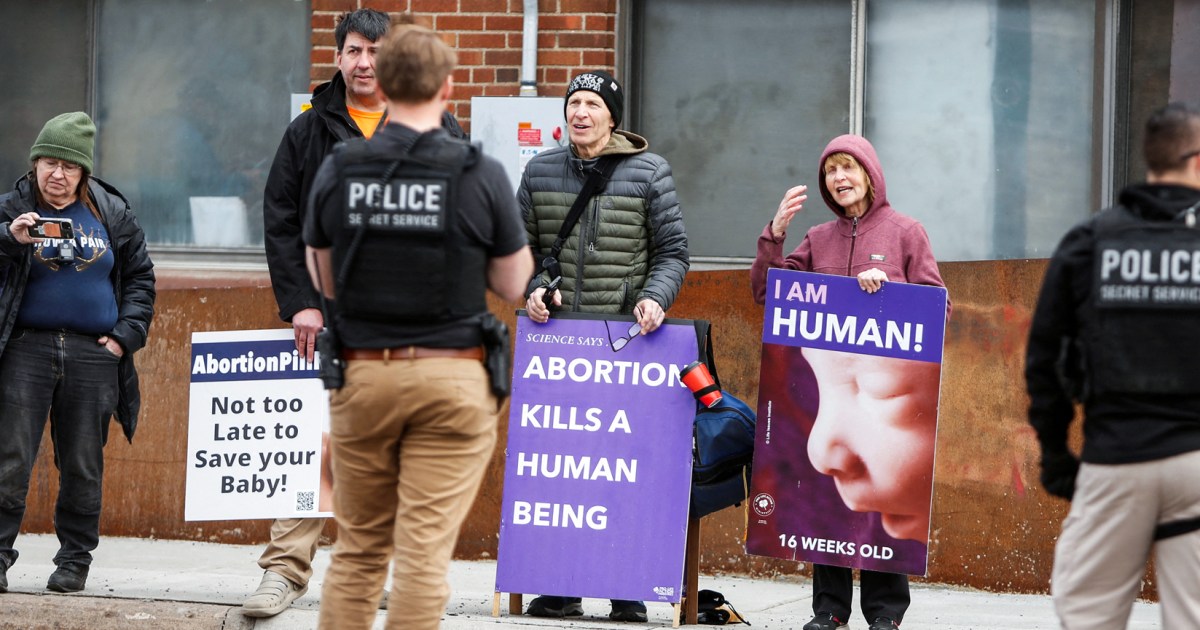
WASHINGTON — The Supreme Court on Monday declined to consider overturning a 25-year-old precedent that upheld "buffer zone" laws limiting how close protesters can get to abortion clinic entrances. Limited time: Save 25% on NBC News subscription Get exclusive reporting, live Q&As and ad-free reading.
AI Summary
Main Idea: The Supreme Court declined to revisit a 25-year-old ruling that allows abortion clinic buffer zones, leaving in place laws that limit how close protesters can get to clinic entrances.
Key Points:
- The decision is a setback for abortion opponents who wanted the court to weaken limits on protest speech near clinics.
- Justices Samuel Alito and Clarence Thomas said they would have taken up the Illinois case.
- The court’s earlier Hill v. Colorado ruling from 2000 had upheld buffer zones, and lower courts said they were bound by it.
- The cases came from laws in Illinois and New Jersey aimed at reducing threats, intimidation, and harassment outside clinics.
Impact on the People
Negative Impact
The ruling keeps limits on protest distance at abortion clinics, which can restrict free speech for demonstrators and reduce access to hands-on advocacy near clinics.
Positive Impact
The buffer zones may help patients and staff feel safer and lower harassment outside clinics.
How did each entity affect people?
Rate how each entity in this article affected the American people.
No entity suggestions or linked entities saved yet.
Candidate Entities9 candidates · 5 weighted vote min · 70% decision
- Supreme Court of the United Statesgovernment agency or bodyPrimaryAI selected
Central court that declined to hear the challenges and is the main decision-maker in the story.
Include 0 (0%)Ignore 0 (0%)5 to threshold - Carbondale, IllinoiscityMajorAI selected
City whose buffer-zone ordinance is one of the two challenged measures.
Include 0 (0%)Ignore 0 (0%)5 to threshold - Coalition Lifenonprofit / NGOMajorAI selected
Anti-abortion group that challenged the Carbondale ordinance and is a central party in the dispute.
Include 0 (0%)Ignore 0 (0%)5 to threshold - Englewood, New JerseycityMajorAI selected
City whose buffer-zone ordinance is the other challenged measure.
Include 0 (0%)Ignore 0 (0%)5 to threshold - Jeryl TurcopersonMajorAI selected
Named protester who challenged the Englewood law and is a central litigant.
Include 0 (0%)Ignore 0 (0%)5 to threshold - Justice Clarence ThomaspersonMajorAI selected
Named justice whose statement explains his opposition to the court’s refusal to hear the case.
Include 0 (0%)Ignore 0 (0%)5 to threshold - Justice Samuel AlitopersonMajorAI selected
Named justice who said he would have taken up the Illinois case, making him a notable figure in.
Include 0 (0%)Ignore 0 (0%)5 to threshold
Comments 0
Comments here are the same thread shown when this article appears in The Pulse.
No comments on this article yet.
Sign in to comment