Immigration and an ailing economy dominate Germany’s election as far-right eye gains
Read Original Source
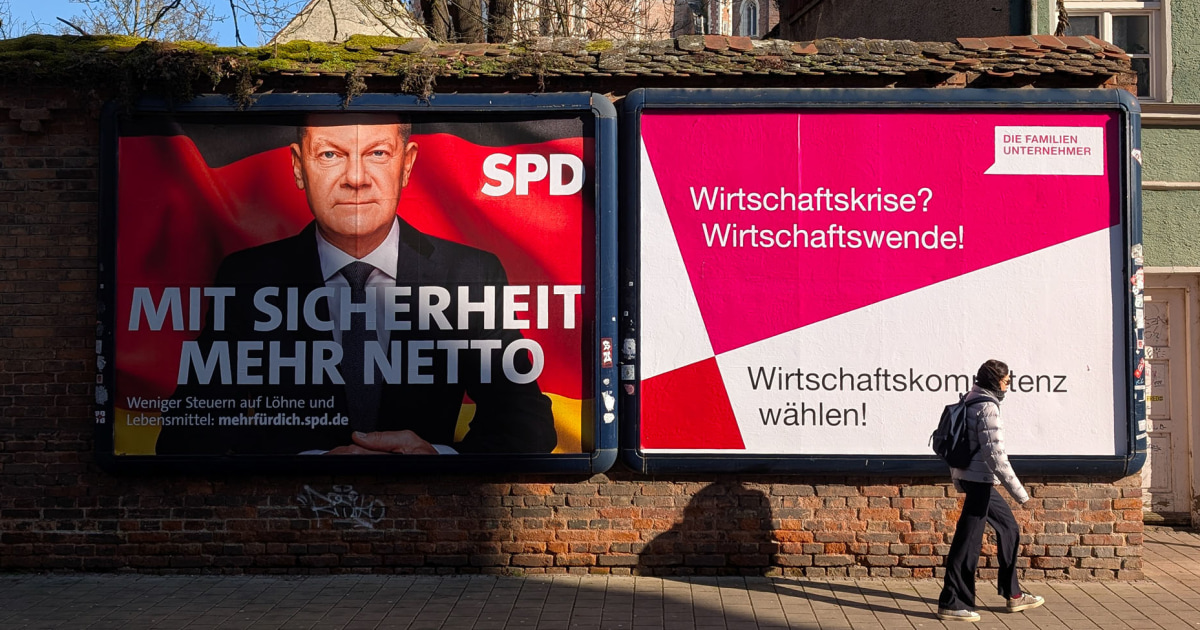
BERLIN — German elections usually pride themselves on being reliably boring. Not so this time. Limited time: Save 25% on NBC News subscription Get exclusive reporting, live Q&As and ad-free reading. The world’s third largest economy goes to the polls Sunday under the shadow of unusually brusque interventions from the Trump administration in support of the anti-immigration far right.
AI Summary
Main Idea: Germany’s election is centered on immigration and economic worries, with Friedrich Merz leading the polls as Alternative for Germany seeks a major gain.
Key Points:
- The CDU, led by Friedrich Merz, is ahead in the polls and is pushing harder border controls, lower taxes, and less red tape.
- Alternative for Germany is polling around 21%, which could make it the second-strongest party, even as it is watched by domestic intelligence for suspected extremism.
- Immigration has become a major campaign issue after a series of attacks, and the far right has drawn support from Trump allies like Elon Musk and JD Vance.
- Germany’s weak economy, pressure from the war in Ukraine, and doubts about U.S. support are also shaping the vote and possible coalition talks.
Impact on the People
Negative Impact
Germany’s weaker economy and a stronger far-right could unsettle US trade, markets, and NATO ties, raising costs and uncertainty for American households and businesses.
Positive Impact
A more business-friendly German government could ease some trade and investment barriers for US firms if coalition talks produce stable policy.
How did each entity affect people?
Rate how each entity in this article affected the American people.
- Primary:Alternative for Germanypolitical organization
- Primary:Friedrich Merzperson
Candidate Entities12 candidates · 5 weighted vote min · 70% decision
- Alternative for Germanypolitical organizationPrimaryEvaluated
The far-right party whose expected gains are one of the article’s main focuses.
Include 0 (0%)Ignore 0 (0%)5 to threshold - Friedrich MerzpersonPrimaryEvaluated
Favorite to become chancellor and a central figure in the election coverage, with his campaign positions and comments.
Include 0 (0%)Ignore 0 (0%)5 to threshold - Alice WeidelpersonPrimaryAI selected
Leader of Alternative for Germany and a central public face of the party’s rise.
Include 0 (0%)Ignore 0 (0%)5 to threshold - Christian Democratic Unionpolitical organizationMajorAI selected
Merz’s party and the current polling leader, central to coalition prospects.
Include 0 (0%)Ignore 0 (0%)5 to threshold - Elon MuskpersonMajorAI selected
Named Trump adviser whose endorsement and comments on the AfD are discussed as part of foreign influence on.
Include 0 (0%)Ignore 0 (0%)5 to threshold - GermanycountryMajorAI selected
The country where the election is taking place and whose political direction is the article’s core subject.
Include 0 (0%)Ignore 0 (0%)5 to threshold - Olaf ScholzpersonMajorAI selected
Incumbent chancellor and major election figure whose party’s struggles are part of the core political contest.
Include 0 (0%)Ignore 0 (0%)5 to threshold
Comments 0
Comments here are the same thread shown when this article appears in The Pulse.
No comments on this article yet.
Sign in to comment